Jorge Martín, 13 April 2026 – originally published on marxist.com]
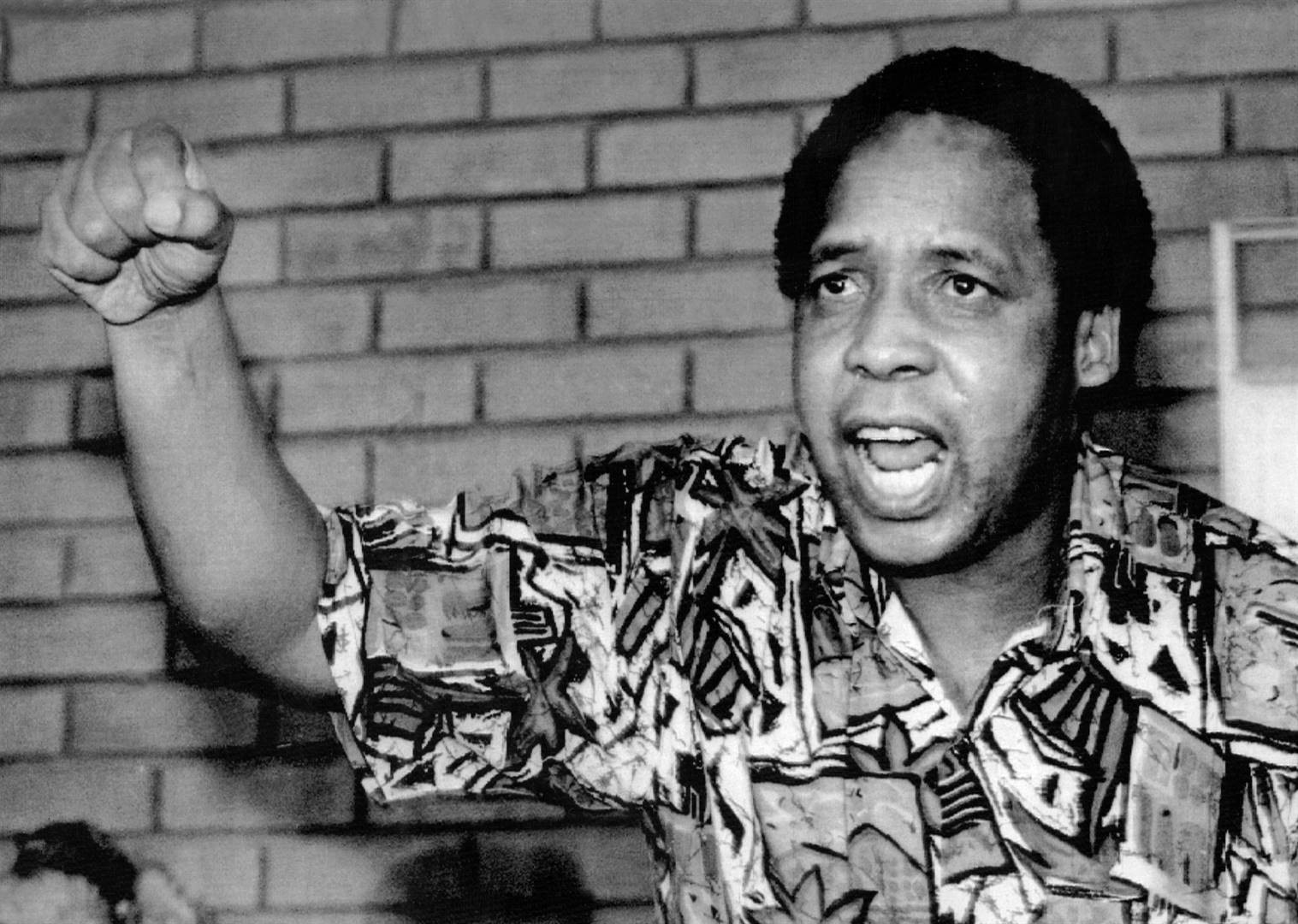
On 10 April, Easter Saturday, 1993, South African Communist Party (SACP) leader and chief of staff of uMkhonto we Sizwe (MK), the African National Congress’s (ANC) armed wing, Chris Hani, was assassinated. Hani was one of the most popular mass leaders of the revolutionary anti-apartheid movement, second only to Nelson Mandela. He was seen by many – especially amongst the black youth – as a radical counterweight to the moderate ANC leaders negotiating with the apartheid regime.
At approximately 10:20am Hani was returning to his home in Dawn Park, Boksburg after having gone to the shop to buy a newspaper. As he stepped out of his car, Janusz Waluś, a Polish far-right anti-communist immigrant and member of the fascist Afrikaner Weerstandsbeweging (AWB) approached him and called for his attention: “Mr Hani”. Janusz shot him once in the body. As Hani fell to the ground, his assassin calmly walked towards him and shot him three more times in the chest and the head. He then walked back to his car and drove away. Hani’s 15-year-old daughter, Nomakhwezi, was with him when he was killed.
Communist revolutionary
Martin Thembisile Hani (Chris was his party name) was born in 1942 in the village of Cofimvaba, Transkei. His father was a migrant worker and union activist who worked in the mines and in construction. He became exposed to radical and Marxist ideas through publications like Torch, the organ of the Non-European Unity Movement (NEUM), as well as the communist publications New Age and Fighting Talk. Originally, he was a member of the NEUM, but then, at the age of 15, moved on to join the ANC Youth League.
He went to University College of Fort Hare and it was there, in 1961, at the age of 19, that he joined the South African Communist Party. The next year he joined the ANC’s military wing, uMkhonto weSizwe (the Spear of the Nation).
In an interview with Luli Callinicos, Hani described why he decided to join the South African Communist Party:
“Why did I join the CP? Why was I not just satisfied with the ANC? I belonged to a world, in terms of my background, which suffered I think the worst extremes of apartheid. A poor rural area where the majority of working people spent their times in the compounds, in the hostels, away from their families. A rural area where there were no clinics and probably the nearest hospital was 50kms. Generally a life of poverty with the basic things unavailable. Where our mothers and our sisters would walk 3kms and even 6kms, whenever there was a drought, to fetch water. Where the only fuel available was going 5, 6kms away to cut wood and bring it back. This was the sort of life. Now I had seen the lot of black workers, extreme forms of exploitation. Slave wages, no trade union rights, and for me the appeal of socialism was extremely great. Where it was said that workers create wealth but in the final analysis they get nothing. They get peanuts in order to survive and continue working for the capitalists. So it was that simple approach, that simple understanding, which was a product of my own observation in addition to theory.”
Having moved to Cape Town, he was arrested and sentenced to 18 months in prison for distributing political material. While on bail pending appeal, he escaped from the country. For the next 28 years, he organised the ANC’s forces in exile, as well as fighting in Zimbabwe in 1967 against Ian Smith’s racist Rhodesian regime.
The Hani Memorandum
In 1969, he was the first of five prominent members of the armed wing to sign the so-called Hani Memorandum, a scathing criticism of the bureaucratisation and bourgeoisification of the leadership of the ANC and MK. The memorandum started thus:
“We, as genuine revolutionaries, are moved by the frightening depths reached by the rot in the ANC and the disintegration of M.K. accompanying this rot.”
The criticism concentrated on the corruption and the lifestyle of the organisation’s leadership in exile, in contrast with the living conditions of the oppressed Black masses back home:
“We are disturbed by the careerism of the ANC Leadership Abroad who have, in every sense, become professional politicians rather than professional revolutionaries. We have been forced to draw the conclusion that the payment of salaries to people working in offices is very detrimental to the revolutionary outlook is of those who receive such monies. It is without doubt that such payments corrupt cadres at any level and have the effect of making people perform their duties or fill offices because of money inducement rather than dedication to the cause”
It also criticised the bureaucratic police methods used to weed out dissent:
“The Security Department is internally directed. It is doing nothing against the enemy. It has achieved nothing of military importance. (…)
“In the prosecution of its internally directed activities the Security Department has become notorious. Those who serve in it have the central task of suppressing and persecuting dedicated cadres of M.K. who have nothing to lose by participating in the struggle except their chains.”
Finally, it criticised the separation of the military organisation from the political organisation.
The criticisms raised in the memorandum expressed the frustration of a layer of genuine revolutionaries with their petit bourgeois leaders. However, their criticisms did not go far enough. The crucial political and strategic question was the two-stage theory, the rigid separation between the so-called National Democratic Revolution and the struggle for socialism, which had been imposed by the Stalinised SACP onto the ANC. In this rigid Stalinist scheme, the National Democratic Revolution, which had to be led by the ANC, was supposed to be the first phase, which would lead to the defeat of apartheid and the establishment of a bourgeois democracy. Only after that would the question of socialism be raised, and the SACP would somehow become the leading force.
The signatories of the memorandum were suspended, but the ANC leadership, headed by Oliver Tambo, was forced to call the 1969 Morogoro Consultative Conference, which issued a radical-sounding strategy and tactics document drafted by SACP leader Joe Slovo. The revolutionary youth wanted to inscribe socialism in the programme, but they were held back by the SACP’s leaders. The document talked of the armed struggle towards the taking of power, but conceived it as part of a mythical National Democratic Revolution. A handful of references to socialism, the role of the working class and the “complete political and economic emancipation of all our people” were introduced as concessions to the radicals, and the suspended MK fighters were reinstated. A Revolutionary Council was established, which ensured the SACP’s domination over the political line of the ANC.
In this whole episode, Hani showed his independence and loyalty to revolutionary principles, features which would help him solidify his image as a radical leader, closely in touch with the aspirations of the revolutionary rank and file of the movement.
He survived three assassination attempts. From 1974, he was a member of the ANC National Executive and was appointed head of uMkhonto weSizwe in 1987.
Revolution or negotiations?
From the mid-1980s, South Africa was in the throes of a revolutionary upsurge. The powerful COSATU trade union federation was formed in 1985, organising the ranks of the black proletariat. 1986 saw the Soweto uprising, which was drowned in blood by the apartheid state. In May 1987, over 2.5 million workers came out in a national stay-away strike for a living wage. That was followed by the historic 21-day strike by 340,000 mineworkers.
Finally, in 1989, a mass National Defiance Campaign saw hundreds of thousands take action, through strikes, boycotts, and mass demonstrations against the whole of the apartheid regime. This movement forced it to lift the ban on the mass organisations, including the ANC. It was at this point, with the unbanning of the ANC in 1990, that Chris Hani was able to get back to South Africa.
The ruling class was torn. They realised that their system could not be maintained through repression, as it would risk provoking a full-blown revolution which would have put an end to capitalism, and with it their power, wealth and privileges. At the same time, they were fully aware that one person, one vote meant a majority ANC government, and they feared that this could open the floodgates of a movement towards the expropriation of capitalism. The more far-sighted elements realised that they had to lean on and rely upon the middle-class leaders of the ANC to keep the masses in check and ensure the continuation of capitalism, by making substantial democratic reforms.
Back in South Africa, Hani dedicated himself to the mass revolutionary movement. In September 1992, he played a leading role in the campaign of mass mobilisations which led to the infamous Bisho Massacre. On 7 September, roughly 80,000 marchers, led by Chris Hani, Cyril Ramaphosa, and Ronnie Kasrils, marched toward Bisho (then the capital of the so-called Ciskei homeland, established by the apartheid regime). Their goal was to overthrow the puppet military authorities in the Bantustan and to reincorporate Ciskei into South Africa.
As marchers tried to bypass a razor-wire fence, soldiers of the Ciskei Defence Force (CDF) opened fire with automatic weapons and grenade launchers without warning. The massacre resulted in 28 deaths and over 200 injuries.
In these conditions, the leadership around Mandela – who sought compromise in order to preserve capitalism in South Africa – was playing a delicate balancing act in order to keep the revolutionary rank and file under control. The workers and the youth saw the struggle for democracy as part and parcel of the struggle for jobs, land reform, housing, etc. This pressure from below expressed itself in the more radical stances and speeches of some of the leading figures, who were closer to the revolutionary aspirations of the rank and file. Chris Hani was the most prominent of them.
Years later, WikiLeaks revealed a secret US diplomatic cable discussing the different characters of Chris Hani and Thabo Mbeki (who was to become South Africa’s president in 1999).
“3. If Mbeki and Hani (both 48) still have a close friendship, we would be surprised. (…)
“4. Mbeki is the consummate diplomat who is believed to be largely responsible for choreographing the overall policy shift away from the armed struggle to negotiations in recent years. (…)
“5. While Hani no doubt supports official ANC policy, he skirts very close to the edges when it comes to the role of uMkhonto weSizwe (MK). Many of his public remarks, which the SAG [South African government] considers inflammatory and contrary to the spirit of ANC-SAG agreements, could only complicate Thabo’s job of moving talks forward expeditiously. (…)
“6. Two political styles could hardly differ more than Mbeki’s and Hani’s. Mbeki takes a dispassionate, reasoned approach to issues which he presents in understated terms. His authority to deal with SAG officials, captains of industry, white South African opinion leaders, foreign envoys, etc., is second only to Mandela’s. (…)
“8. Hani is more a man of the people. He generally stays out of the negotiating process (except as chair of the armed actions working group where he reportedly does a good job when he participates). He eschews contacts with diplomats, journalists, businessmen, etc., yet appears often on public platforms in the townships wearing quasi-combat fatigues and delivering fiery speeches that arouse and delight the audience. Hani may well cultivate this radical image to some extent, and wittingly allow himself to be used by the ANC as a foil against the PAC’s [Pan African Congress’] effort to win the soul of the township youth.”
Clearly, Hani was firmly committed to the two-stage policy of the leadership of the SACP and the ANC, that is, the need for a national and democratic stage separate and apart from the struggle for socialism. He even spoke publicly about the need for a “mixed-economy”, while at the same time advocating nationalisation and land reform.
But he would also talk about socialism, class struggle and was the very visible leader of the SACP. Of the national leaders of the movement, he was one of those who was more under the radical pressure of the rank and file, and that was reflected in the tone of his speeches at mass rallies. He took over the leadership of the SACP at the time of the collapse of the Soviet Union, when half of the party’s central committee members had resigned from their positions.
He refused to participate in the future Government of National Unity, perhaps because he had serious misgivings about the whole situation and the concessions being made:
“The perks of a new government are not really appealing to me… the real problems of the country are not whether one is in cabinet, or a key minister, but what we do for social upliftment of the working masses of our people.”
Hani’s murder
The killing of Hani in 1993 removed a figure who could have acted as a potential rallying point for a radical challenge to Mandela and Mbeki.
It led to a massive upsurge of anger and revolt, which for more than ten days, suspended the hated apartheid regime in mid-air. Capitalist apartheid could have been swept away had there been a revolutionary leadership able and willing to lead the movement to victory. As Ted Grant commented:
“There were many instances in which the process [the attempt to reach a negotiated solution between the Apartheid regime and the leaders of the ANC, encouraged by US imperialism] seemed to be breaking down. One of them was after the assassination of Chris Hani when the black youth rioted and demanded action on the part of the ANC leaders. The only reply they got was ‘maintain calm’.”
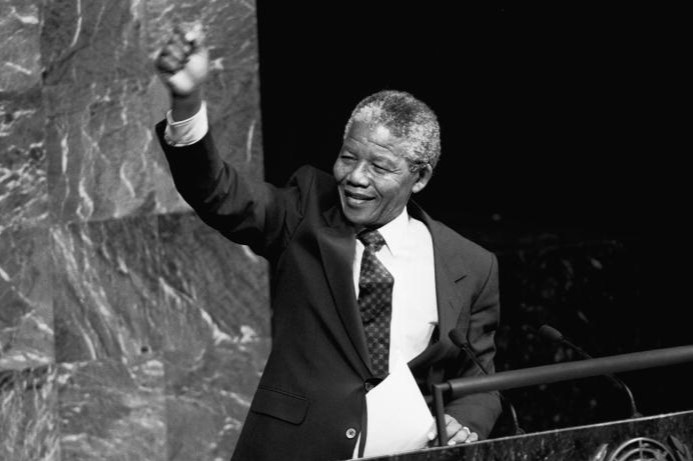
The leaders of the ANC could only contain the mass upsurge which followed his killing with great difficulty and using all of their authority. Mandela was allowed a live TV broadcast in which he called for calm and reconciliation, when the masses wanted struggle and revenge.
Six million came out on 15 April, 1993 in a huge protest general strike. An eyewitness described some of the scenes to Socialist Appeal (issue 12, May 1993):
“Spontaneous actions the day after the assassination shoved Mandela out of the way. In Cape Town the tens of thousands of marchers outnumbered even the crowds who welcomed the release of comrade Mandela in February 1990.
“The African youth dominated the scene. As usual, the pace of the toyi-toying [a South African dance performed at protests] determined the militancy of the marchers. This time the toyi-toying was a fast sprint which only the youth could keep up.
“Marchers streamed into the centre of town from all directions.
“As they entered the city, their anger and militancy burst at the seams in explosions of spontaneous destruction.”
The masses’ anger, particularly that of the youth, was also directed at the movement’s leaders who, instead of organising the struggle, kept calling for peace and negotiations:
“While it was announced on radio and repeated in the press that the venue for the commemoration service would be St George’s Cathedral, on arrival, the marchers were turned back and sent to the Grand Parade.
“In the meantime certain dignitaries and important people were being addressed in the Cathedral. The people then had to wait in the blazing sun for their leaders to arrive, including Muhammed Ali. After a long wait only the sound system arrived. By this time the people’s patience had worn away to a point where a national ANC leader, Trevor Manuel, was assaulted by members of the crowd when he called for peace and order.
“In Soweto on the same day, Mandela was booed when he called for negotiations with the National Party to continue, an event without precedent. (…)
“In the Eastern Cape, the region which normally shows the way, there were attacks on police stations and municipal buildings.”
Articles in the bourgeois media from the time describe the mood:
“The national protest, one of the most violent in months, reflected deep-seated anger over Hani’s assassination last Saturday, allegedly by a white extremist, and growing discontent with the slow pace of negotiations in townships still beset by crippling poverty and hungry for change…
“The bloodshed indicated once again the inability of the South African police to control protests without the use of deadly force…. But the rioting and looting that accompanied dozens of marches, from Cape Town and Port Elizabeth to Durban and Johannesburg, also indicated the inability of ANC leaders to control their more radical, youthful supporters.
“Many of those followers have been suspicious of the ANC’s decision to participate in constitutional negotiations with the white-minority government, and they have supported those talks only out of admiration for Hani, a popular ANC leader and key negotiator. (…)
“The angry mood in Soweto was evident even earlier, during Mandela’s speech. Among the placards held aloft by the crowd were a few reading: ‘De Klerk Must Be Assassinated for Hani’s Death.’
“Although Mandela was warmly welcomed onto the stage, he was booed and jeered when he made a friendly reference to expressions of sympathy for Hani’s death from de Klerk’s ruling National Party. (…)
“During a march in Cape Town, black youths looted dozens of stores during a two-hour melee in which a black youth was shot to death, a peace monitor was stabbed, a policeman was shot and wounded and an ANC official, Trevor Manuel, was assaulted by his own supporters when he attempted to restore order.”
The New York Times also reported the anger of the masses, sometimes directed at the ANC leaders or in defiance of them:
“Across the country, crowd-control marshals deployed by the African National Congress struggled to hold angry youths in check, and often failed. In Cape Town, Durban, Port Elizabeth, Pietermaritzburg and other cities, rallies turned into rampages of looting, burning and clashes with the police.
“No peace! War! War!” rioters chanted in Cape Town, where two people were killed and a train was derailed. The scores of injured in Cape Town included a prominent black leader who was punched in the face as he tried to restrain rioters.
“…for the Congress, it was an embarrassing display of the gap between the moderate, compromise-minded leadership and the unruly, disaffected young men of the townships.
“At a dangerously overpacked amphitheatre in Soweto, Nelson Mandela, the A.N.C. president, laboured to explain the need for discipline and nonviolence to a crowd that surged against the stage and rumbled impatiently throughout his speech.
“His rambling remarks were interrupted by the pop-pop of firecrackers meant to simulate gunfire and by jeers when Mr. Mandela mentioned his bargaining partners in the governing white National Party.
“‘We can all see that he’s too old and he doesn’t want to fight,’ Raseleti Komane, an unemployed 38-year-old from Soweto, said of Mr. Mandela, 74. ‘We want to fight.’ (…)
“The African National Congress mobilized many hundreds of monitors who have in the past proven adept at channeling huge crowds away from trouble, and Mr. Mandela appeared repeatedly on television to implore the public to abjure violence.”
Lacking a revolutionary leadership which could have harnessed that anger and the power of the South African proletariat in the struggle to overthrow not just apartheid but also capitalism, the outcome of Hani’s assassination was to accelerate the transition towards a capitalist democracy.
Mandela and the ANC leadership used all their authority to hold back the movement and restart the negotiations with the regime. The result of those negotiations was that the economic wealth remained untouched, while state power was transferred into the hands of the ANC elites.
The ANC leaders had already committed themselves firmly to capitalism and, through the sunset clauses – which agreed to phase out apartheid through five years of power-sharing between the ANC and the old regime – they rejected even mild nationalisation and agrarian reform, which were an integral part of the Freedom Charter, the movement’s guiding document. At that point, Mandela told de Klerk that a date for democratic elections was needed in order to calm the masses.
Hani was killed by a Polish neo-Nazi, Janusz Waluś, a card-carrying member of the notorious white supremacist gang AWB. But he did not act alone. The gun he used was given to him by Clive Derby-Lewis, who was the Shadow Minister for Economic Affairs for the Conservative Party. The gun had been stolen from a military facility. Both Waluś and Derby-Lewis were sentenced to death, but then had their sentences changed to life imprisonment with the abolition of the death penalty.
Over the years, there has been a strong suspicion that they did not act alone, but this has never been fully investigated. Some point to the participation of Vlakplaas C10, the apartheid regime’s secret service death squads, in the assassination. Certainly, the secret services had been part of several plots to assassinate Chris Hani before, in South Africa and in Lesotho.
Derby-Lewis was released on medical parole in 2016 and died shortly afterwards, unrepentant. He always maintained that he had acted “in defence of my people, who were threatened with a Communist take-over.”
Waluś was released on parole in December 2022 to protests by Hani’s widow.
Over 30 years after the assassination of Chris Hani, capitalist democracy in South Africa has not delivered for the black working class majority who fought through great sacrifice to achieve freedom. Thus, his words in defence of socialism remain relevant:
“For the wretched of the earth, the 90 percent of humanity living in capitalist society, socialism is the only answer, history has not ended… we will mould a new, just society.”