[Shanti Stewart, 27 April 2026]
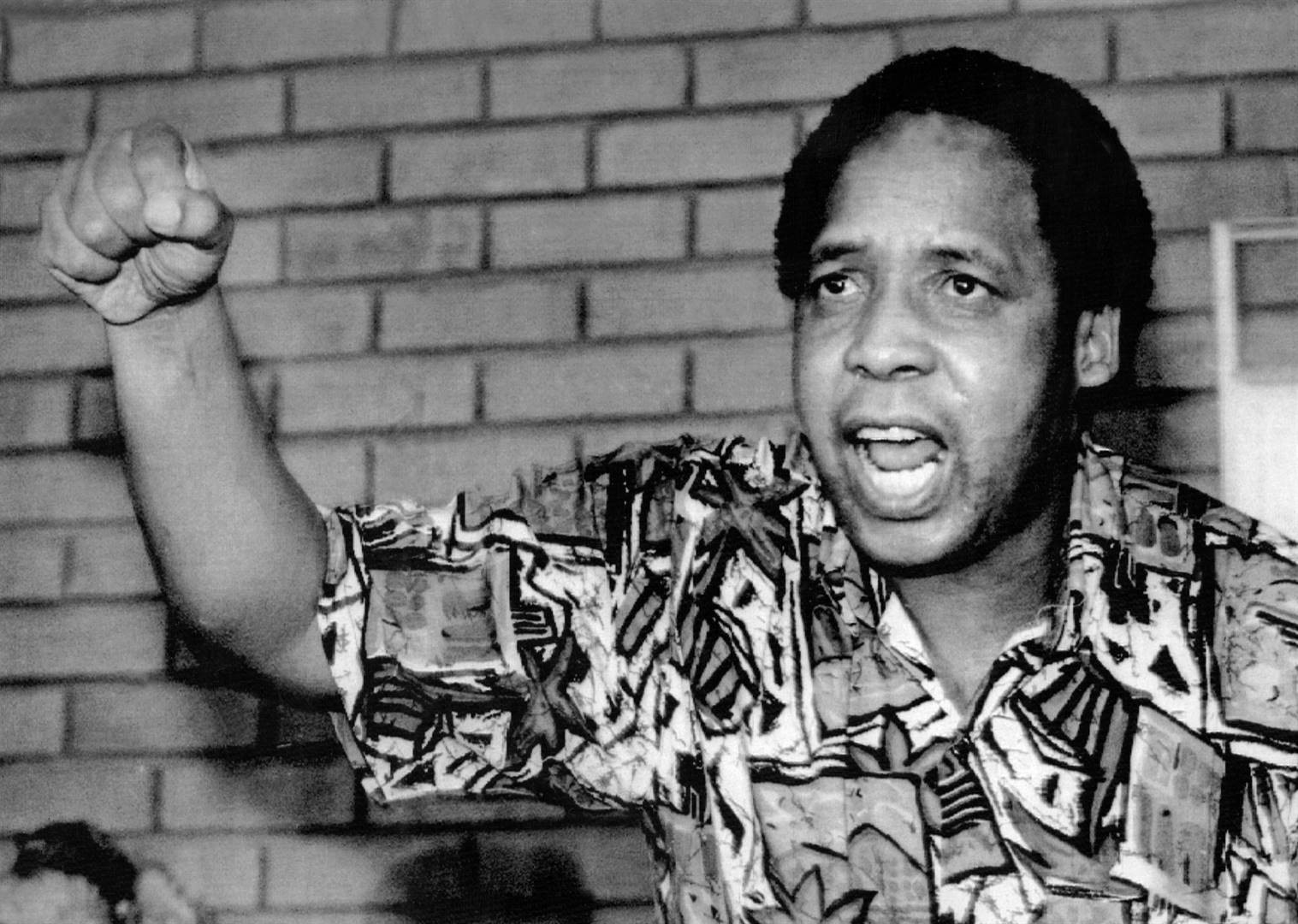
On 16 April 2026 Julius Malema, the Commander in Chief of the Economic Freedom Fighters (EFF), received a five-year “immediate” jail sentence (subject to an appeal process that could take years) in addition to fines and a further suspended sentence for firing a gun at a political rally in 2018.
After a video of the incident surfaced on social media, AfriForum, a right-wing Afrikaner lobbyist group, pushed the state to pursue charges. Malema was found guilty in October last year of discharging a firearm illegally, illegal possession of a firearm and reckless endangerment.
It is no coincidence that AfriForum played a central role in driving this prosecution. AfriForum has access to extensive funding and legal resources, including a dedicated private prosecution unit. It is a political actor rooted in defending the material and ideological interests of Afrikaner capital. Although Afriforum funders are usually kept discreet it is no secret that the most reactionary layers of the white ruling class in South Africa as well as western capitalists provide crucial support for the organisation for its extensive legal and international lobbying operations.
Its CEO Kallie Kriel has publicly downplayed the historical crimes of apartheid, stating:“I don’t think that apartheid was a crime against humanity.” This is no PR mistake, but part of a broader ideological position. AfriForum has referred to apartheid as a “so-called historical injustice”, and its deputy Ernst Roets has described apartheid as a “woolly concept.”
AfriForum leaders consistently present post-apartheid South Africa in racial terms, but have inverted reality with Roets arguing that there is “persecution of South Africa’s minorities” (here referring to South Africa’s white minority specifically) while on an international propaganda tour, and has characterised violence on farms as occurring at a “disproportionate level.”
Kriel has gone further, claiming that those who criticise narratives around farm attacks are effectively “accomplices to the murders of farmers.” These statements form part of AfriForum’s campaign to present white South Africans as a persecuted minority under threat. Malema is the most ardent and well known challenger of these fantasies.
This narrative has been aggressively exported internationally. In 2018, Kriel and Roets conducted a lobbying tour in the United States, meeting with figures linked to the Donald Trump administration and conservative think tanks, where they promoted false claims about farm killings and land reform. They also attended the first international CPAC event in Hungary, the biggest conference of reactionaries in the Western Hemisphere, where Roets spoke about “preservation of our Western heritage” while claiming that Afrikaners have generational “land rights” in South Africa. These efforts fed directly into statements by Trump, who publicly called for investigations into “large scale killing of (white) farmers,” echoing AfriForum.
The ideological content of this campaign has been repeatedly challenged. South African courts have explicitly rejected the central premise underpinning these claims.
A 2025 court ruling described the idea of a “white genocide” in South Africa as “clearly imagined and not real.” Despite this, AfriForum continues to amplify narratives of Afrikaner persecution internationally.
Due to his outspoken challenges to Afriforum’s narrative, Malema has been a central target of this campaign. In the case AfriForum v Malema heard in the Equality Court, AfriForum attempted to criminalise the liberation song “Kill the Boer”. The court ruled against AfriForum, finding that the song did not constitute hate speech in its historical and political context.
AfriForum’s modus operandi is clear: advance racist ideas, lose in court when tested against evidence, and then escalate the campaign politically and internationally regardless.
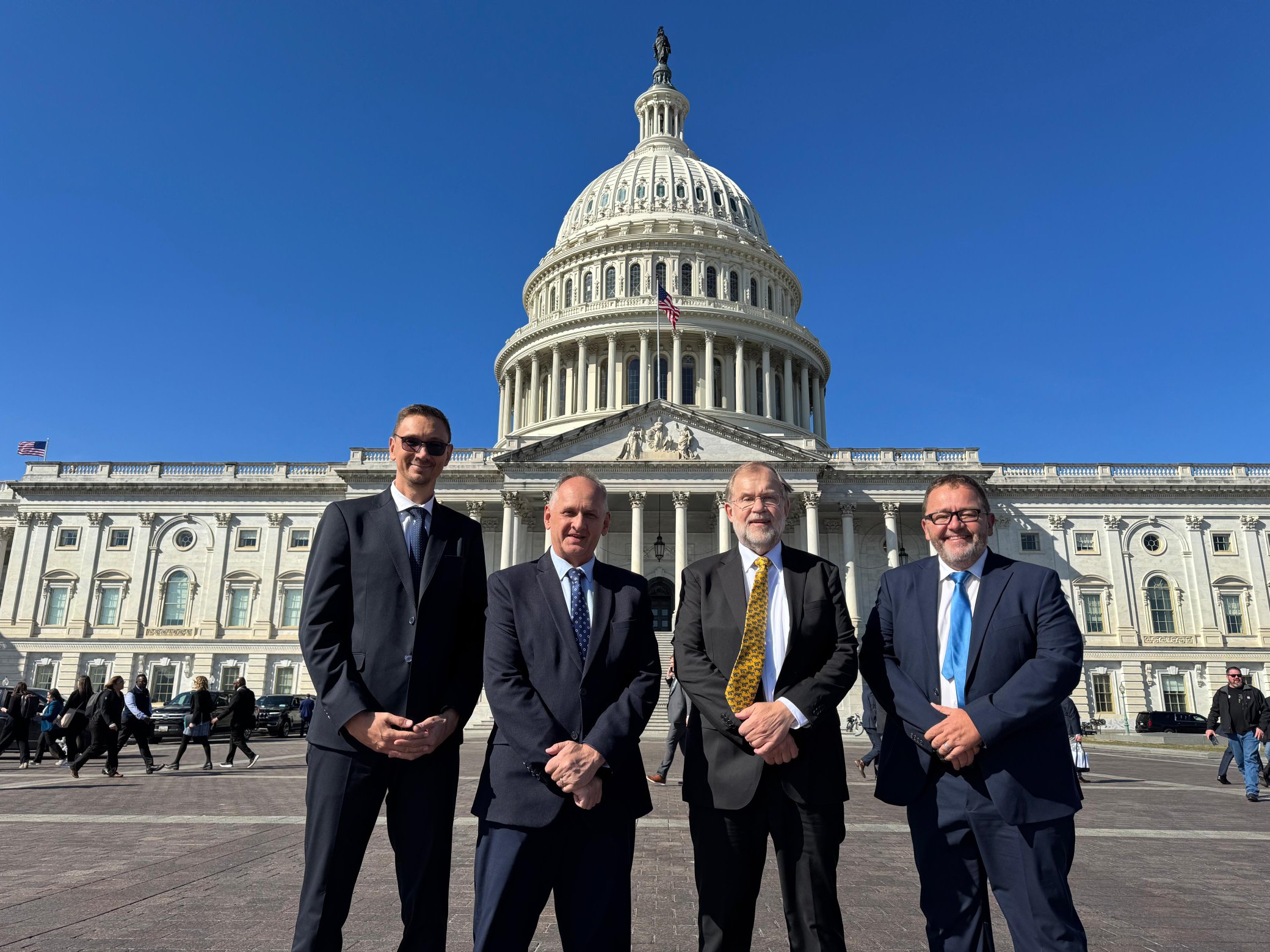
Afriforum has positioned itself within broader currents of US imperialism. Afriforum attended another conservative conference this time in the US itself, NatCon 4 (National Conservative Conference) in Washington DC in February 2025. Roets spoke at the conference and appeared on the Tucker Carlson Show where he provided accounts of the situation in South Africa that could later be used by the Trump administration to apply pressure on the ANC government.
US capital has a clear material interest in shaping South Africa’s political direction, particularly in sectors such as mining and strategic resources. Supporting right-wing opposition forces and pressure groups serves to counter movements that challenge imperialist economic interests.
The alignment is not accidental. AfriForum’s lobbying in the US, its amplification by right-wing media, and the adoption of its narratives by figures within the US political establishment demonstrate a convergence of interests. US capital benefits from weakening radical and anti-imperialist forces in South Africa and needs leverage in negotiations to keep South African trade from moving further towards China. AfriForum benefits from the amplification of their white genocide narrative by the White House by US interference in South African domestic policy that maintains the privilege of white minority capital.
Malema has faced AfriForum in court before and come out on top but in the latest case against him, it is clear that the law is not applied evenly. As Marx explained, law under capitalism reflects and defends existing property relations. It is not an impartial arbiter standing above society. It is part of the machinery of class rule.
Malema made a statement after his sentencing where he criticised the judge and the court for being racist and incompetent and claimed that his harsh sentence is part of a political plot to undermine his fight for black people’s economic freedom. He is correct to identify a political motive behind the case but the issue is not simply that he “speaks for black people.” The deeper issue is that he gives expression, however inconsistently, to mass anger rooted in the real material conditions of the working class and poor. This is what is impermissible to the white ruling class in South Africa, who are steadily running out of tactics to distract from the blatant social contradictions thirty-two years after formal democracy.
A defining event that led to the formation of Malema’s party, the EFF, was the Marikana Massacre, where police opened fire on protesting miners killing thirty-four and injuring seventy-eight. At the time the response from both COSATU affiliated union NUM (the union Cyril Ramaphosa led) and the ANC government was cold and calculated and clearly demonstrated whose interests in society they defend. As a result the more radical section of the ANCYL with Malema at its head, split to form the EFF and a prominent section of COSATU leadership with Zwelimziva Vavi split to form SAFTU as an alternative to COSATU. In contrast to Malema’s sentencing, it is worth noting that to date not a single police officer or commanding officer has been charged, let alone sentenced for their cold blooded murder of desperate workers.
This is the cold reality and hypocrisy of the judiciary under capitalism. It is a tool for class rule and can be used by reactionary forces to attack the left and the working class when need be. The only way to fight this is through class struggle. That means organised action in the workplace and communities and clear slogans like “Voetsek Afriforum!”, “Down with Capitalist Legality!”
We should also be wary of “left wing commentators” who give credence to bourgeois legality. An example of this is a recent Ali Ridha Khan article on Malema’s sentencing. Khan is an academic and filmmaker and could be described as a “social democrat” with a focus on Black Consciousness. In his article “When Law Becomes a Weapon” he puts forward the argument that the Malema ruling is a witch hunt and an attempt to silence representatives of “progressive politics” in South Africa. He goes on to say that to fight this reactionary attack, all progressive forces need to “defend the republic” (capitalist republic), where “ constitutional democracy, functions as a kind of tabernacle… meant to stand above the ordinary warfare of politics and power”, framing the judiciary as an independent arbitrator and not a tool of class rule. In summary he argues that we need to use the “legal system” (bourgeois legal system) to defend against these attacks and use our democratic rights to fight white supremacy. “broad democratic left… defending the tabernacle of law”, demonstrates the failure to recognise the very nature of the system we are fighting.
In reality, Afriforum’s attack through the capitalist courts on Malema goes further than silencing a voice, it is a direct attack on the working class’s means to defend itself against the state’s monopoly on violence. This is not a trivial correction but at the centre of what it means to fight capitalism. Ultimately, the capitalists, through the functions of the state, will use violent repression when the masses challenge their system. This has been demonstrated by history time and time again.
To contrast the Malema firearm case with the example of the Marikana Massacre, we see concretely the lengths the capitalist class will go to protect their interests. Here the courts and entire “justice” system defended violent repression and justified the action of the police precisely because the demonstrators were “armed” – though only with knopkerris and sticks. If they are willing to sanction mass killing to protect profits, how much further are they willing to go to defend against more real threats to the system? The judiciary holds no answers for poor black and working people, it needs to be torn down along with the rest of the rotten state apparatus.
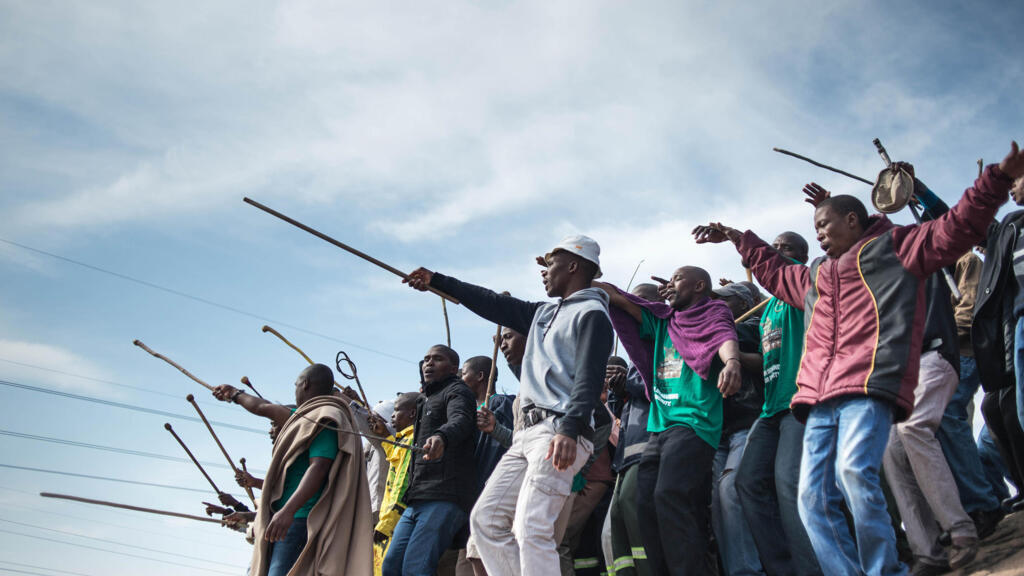
On August 16, 2012, workers at the Lonmin-owned Marikana mine northwest of Johannesburg were observing a wildcat strike to demand the minimum wage. In a bid to break the strike, police opened fire, killing 34 miners and wounded dozens more. It was the worst police violence in South Africa since the end of apartheid 18 years earlier. / AFP PHOTO / MUJAHID SAFODIEN
In the final analysis if Malema had acted violently, and shot into the crowd for some deranged reason, best believe he would have been dealt with by his own supporters decisively. We see examples of this in working class communities across the country.The left and the working class have the right to take up arms to defend themselves and we should let no judge or courtroom diminish this.
The South African working class is the most powerful force in society. What is missing is not energy but leadership and a programme that can funnel this energy and aim it squarely at the capitalist system.
The task is clear. Build a revolutionary movement rooted in the working class. Break with the illusion that capitalism can be reformed in the interests of the majority and organise committees in workplaces and communities, beyond the limits imposed by bourgeois democracy.
Let us not fight for a nicer, less racist, more democratic capitalism, but to overthrow it entirely.
Forward to a socialist South Africa under workers’ control.
Power will not be handed to the workers. It must be taken.
Amadla awethu!