[Shanti Stewart – 15 June 2026]
50 years ago, the Soweto Uprising was the expression of the deep contradictions of South African capitalism under apartheid: poverty, racial oppression, cheap labour, state violence, and a school system designed to regenerate racial oppression. Today, apartheid has fallen, but what has been gained for the youth?
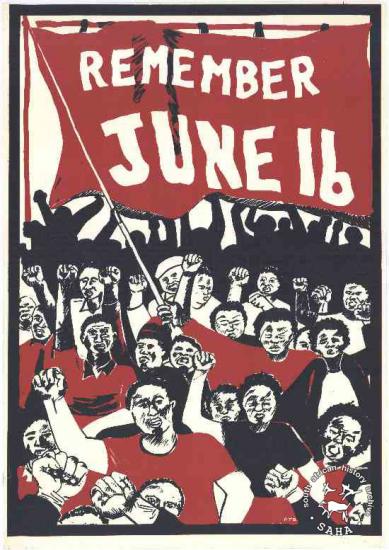
It began with thousands of black (non white) school students marching through Soweto with discipline and courage. Young people refused to be trained as servants for a system built on their parents’ exploitation. They strove for real access to education and a brighter future – the police put them down in their thousands, shattering any inclination of winning reforms under the apartheid system. By the end of the uprising students demanded the end to Apartheid and all its mechanisms of racial and class oppression, playing a vital role in re-igniting the struggle against Apartheid both within, and outside of South Africa’s borders.
Apartheid, a Capitalist Programme
Understanding the Soweto Uprising does not start with the first shot fired, but with the system that loaded the gun.
Apartheid was not just about racial hatred in the abstract. It was the necessary political form of South African capitalism. The mines, factories, farms and white suburbs needed cheap black labour. The pass laws, migrant labour system, Bantustans, police raids, township administration boards and segregated schools all served that need. Black urban workers were expected to work, obey, return to overcrowded townships, and never threaten the profits of the bosses.
By the early 1970s, the contradictions of the system were sharpening. The relative lull* in struggle after Sharpeville was beginning to break. South Africa’s post-war boom was ending, inflation was rising while wages for black workers remained brutally low. In 1973, the Durban strikes spilled out of the factories and announced the working class’ return to industrial struggle. It was the biggest strike wave since the Second World War and marked the rebirth of the independent black trade union movement. Workers were learning and demonstrating that their power lay not in appeals to the bosses, but in their ability to stop production.
This was the class backdrop to the Soweto Uprising. The children who marched in 1976 were the children of working class families. Their anger was born out of homes with no electricity, hot water, security or decent wages. Their classrooms were an extension of the same system that exploited their parents.
The Rise of South African Student Organisations and the Black Consciousness Movement
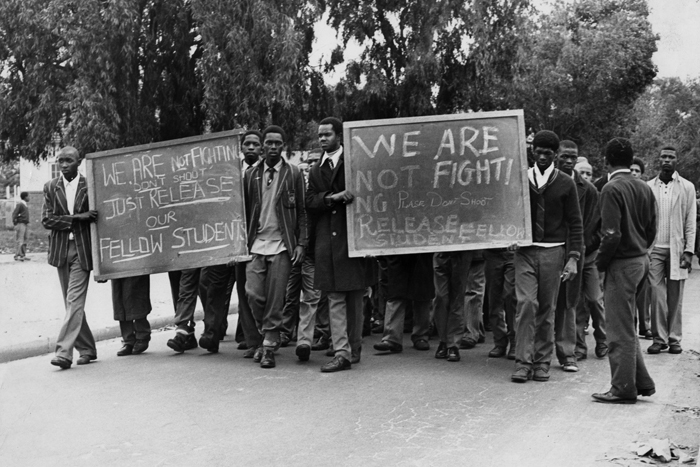
Bantu Education was designed for a number of purposes. The apartheid state did not want black children to think freely, study further or dream beyond the bottom of the labour market. It needed them prepared for manual labour, domestic work and subservience. Hendrik Verwoerd made this logic clear: “There is no place for [the Bantu] in the European community above the level of certain forms of labour.”
The 1974-75 Afrikaans language decree became the spark because it summed up the whole insult. The regime ordered black schools to teach 50% of major subjects in Afrikaans, whereas before the language of instruction was only English. Many teachers could not teach in Afrikaans and students knew Afrikaans as the language of police, prisons and bosses (the oppressors). Parents and teachers raised objections through official channels , who in reality were often government puppets, but the state refused standing firm. It treated black communities as raw material to be managed.
The Black Consciousness Movement had already helped change the mood of the 1970s. Steve Biko’s BPC (Black People’s Convention) and SASO (South African Students Organisation) argued that the oppressed had to break the mental chains of inferiority and take responsibility for their own liberation. Black Consciousness gave a new generation the confidence to confront poverty, overcrowding and police repression. SASM (South Africa Student’s Movement), the high-school expression of this mood, became central in politicising students and linking scattered anger into collective action.
16 June 1976
The uprising did not begin as a fully formed national revolt or flow from the broader anti-apartheid movement. It developed out of the material conditions in Soweto and through action, response and escalation. On 24 February 1976, students at Thomas Mofolo Secondary protested against Afrikaans instruction. The SASM activists from Naledi High mobilised and met up with student protesters, discussed the issues and helped coordinate the dissatisfaction into organised resistance, setting up students representative councils at a number of high schools.
Through May and June, the resistance spread. Schools in Orlando, Orlando West, Naledi and beyond became centres of agitation. Students debated, organised and prepared. On 13 June, hundreds met and voted for a mass demonstration. An Action Committee was formed, with representatives from different schools. This committee would become the Soweto Students Representative Council (SSRC). Its method was democratic organisation, clear demands and disciplined action.
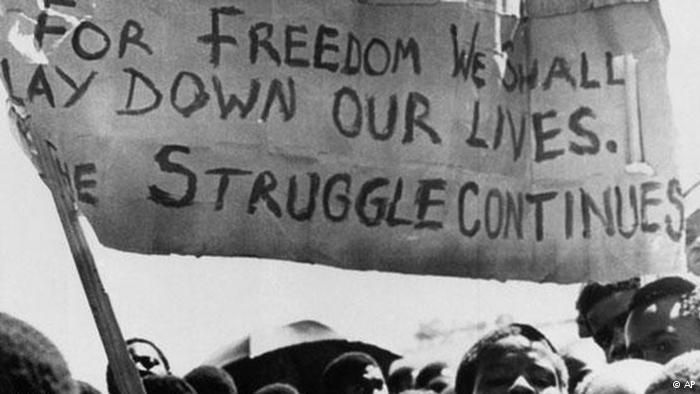
On the morning of 16 June, students gathered at Naledi High, Morris Isaacson High and other schools. Their plan was to march to Orlando Stadium, collect students along the route, and hold a mass meeting. They carried banners demanding an end to Afrikaans instruction and Bantu Education. Their leaders urged discipline. Tsietsi Mashinini warned students not to provoke the police.
The state responded with the only language apartheid truly trusted: force.
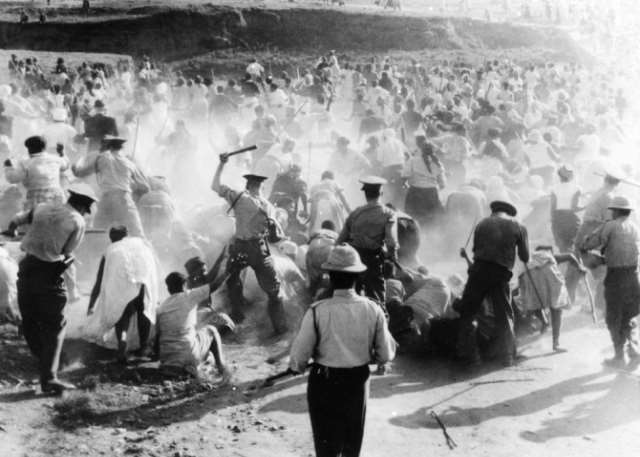
Near Orlando West, police blocked the march. Tear gas was fired towards the crowd and as students began to panic and disperse a policeman opened fire with his pistol. Others followed, as now famous Hector Pieterson, Hastings Ndlovu and others were shot. Sam Nzima’s photograph of Hector being carried by Mbuyisa Makhubo, with Antoinette Sithole running beside them, became the image through which the world saw apartheid’s true brutality.
As news spread, the march became an uprising. Students fought back with stones. Symbols of apartheid rule were attacked. West Rand Administration Board buildings and vehicles were torched. Beer halls and bottle stores became targets because they represented the state’s contempt for township life: extract money from black communities through labour, heavily police them, keep them undereducated, and leave them in poverty.
By the evening, armoured vehicles were in Soweto and fires burned across the township. The regime first tried to minimise the death toll, but the reality was far greater. Over the following days and months, the uprising spread through Soweto, the Transvaal, the Western Cape and other parts of the country, where hundreds were killed and thousands were injured in the wider revolt.
On 17 June, the state escalated as police were deployed in greater numbers and the army was placed on standby. Clinics became the target of police raids, as police forced medical professionals to provide names of patients with bullet wounds, who were then arrested under the assumption of involvement in the uprising. Strikes followed while white Wits students marched in Johannesburg, and black workers joined them. The uprising had begun to reveal the nightmare of the ruling class: youth rebellion linking with working-class power.
The Struggle, Re-Ignited
On 18 and 19 June, the revolt continued to spread. The police could occupy streets, but could not put the old fear back into the minds of the youth. Every act of state repression widened the political meaning of the struggle. What began as a fight against Afrikaans instruction became a fight against Bantu Education, township rule, police terror and apartheid itself.
The contradictions of the system created the conditions for the uprising. The economy needed more semi-skilled labour but the system needed the suppression of independent black thought. The Bantu education system successfully brought more black children into state education, but this forced youth living under the same repressive and demoralising conditions into small classrooms. The same way that industrialisation under capitalism creates the ideal conditions for working class organisation, the Bantu Education system created the conditions for organised black youth. The state imposed Afrikaans decree, unified students and became the spark of an uprising that was the beginning of the end for the Apartheid system.
The impact was immediate and historic as it revived mass struggle inside the country. Student councils spread and youth organisation became a central weapon of resistance. The SSRC moved beyond school issues into broader community struggles, including rent and township administration. The struggle over education had become a struggle over power.
The state understood the danger and targeted Black Consciousness, SASM, student leaders and community organisers. Steve Biko was banned, persecuted and killed while in custody in 1977. Hundreds of student leaders were detained, forced underground or driven into exile as thousands of the “Class of 76” joined the ANC and PAC’s armed wings outside the country.
This revealed both the courage of that generation and the weakness of the movement’s leadership. Exile and armed struggle gave many youth a direction, but also removed some of the best young fighters from the workplaces, schools and townships where their revolutionary leadership was most needed. The masses inside South Africa still had to build the force that would shake apartheid in practice.
The generation of 1976 fed directly into the battles of the 1980s: COSAS, civic organisations, UDF campaigns, township uprisings, school boycotts, rent struggles, stayaways and the rise of militant unions. The growing alliance between militant youth organisations and the independent trade union movement was not decoration but rather the strategic necessity of the oppressed and became the strategic nightmare of the apartheid state.
How the story of the students of the Soweto Uprising is retold today
Apartheid was not (and could not have been) defeated by moral persuasion. It was battered by mass class struggle and forced into negotiations by workers, youth, women, communities and the poor making the country impossible to govern in the old way. Negotiations with the ANC and liberation leaders became the only strategic way-out for the Nationalist Party, which would allow the retention of economic power by white capital while conceding political power to the (co-opted) ANC, de jure.
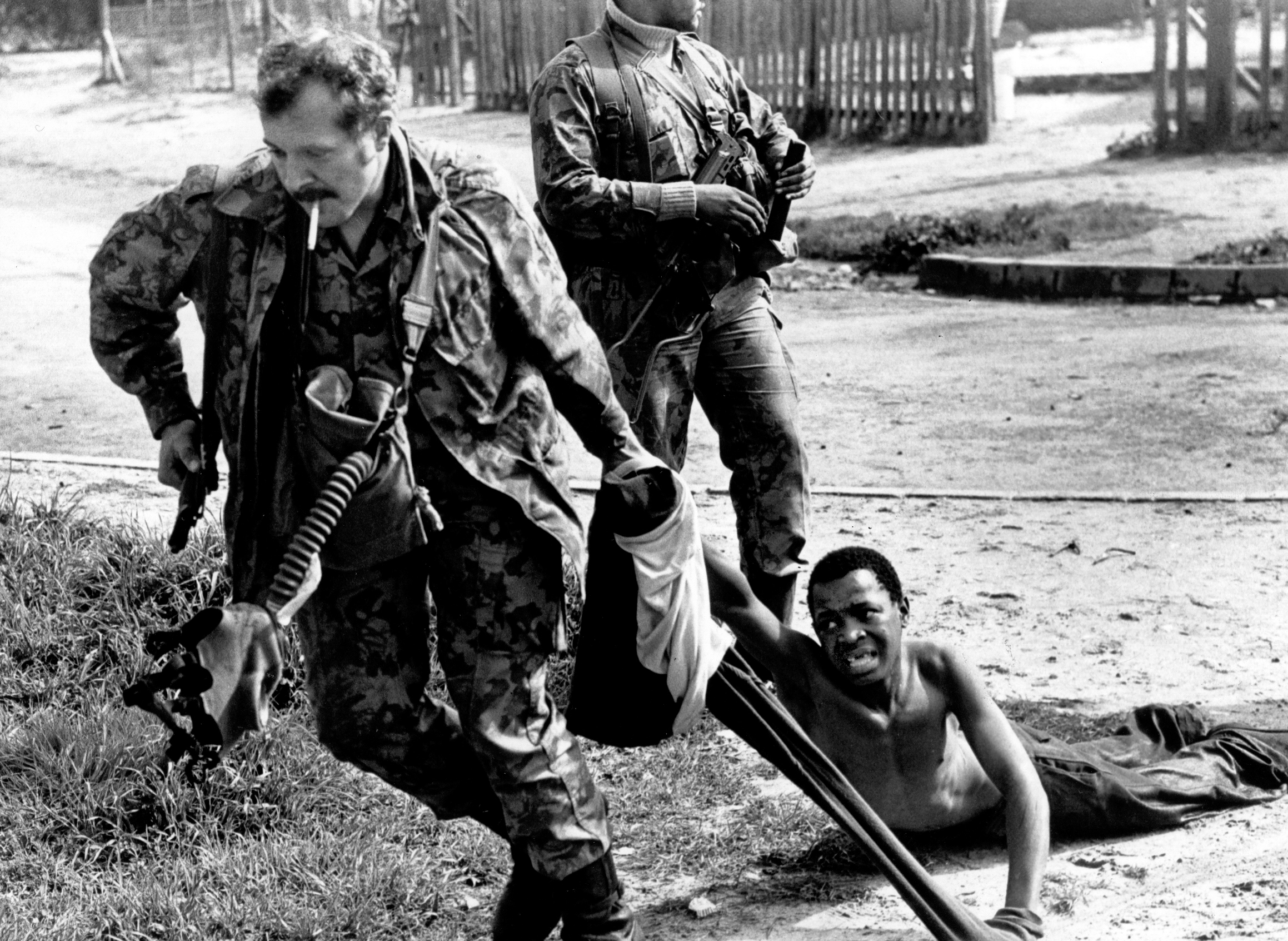
Today, the Soweto Uprising is often buried under speeches, wreaths and official hypocrisy. The ruling class wants a harmless Youth Day that is sad enough to mourn and deep enough in history to forget while the fundamental demands of those students who died in Soweto have still not been met. Black children still receive a fraction of the funding per child when compared to their white counterparts. They learn in unsafe, overcrowded and underfunded schools, with no real prospect of work, never mind tertiary training. The Soweto Uprising teaches the oppressed that they will not win dignity by waiting, rather through mass organisation, class struggle and the overthrow of the racist capitalist system in South Africa.
The formal signs of apartheid have fallen, but the class structure it protected still remains.
The Soweto Uprising must therefore be remembered as an uprising, not only a massacre. It was the moment when the children of the working class stepped onto the stage of history and shook the apartheid state. They proved that even the most repressive system carries within it the forces of its own destruction.
Our task is not to praise them once a year and return to passivity. Our task is to complete what they began: to build a revolutionary movement rooted in the working class, armed with socialist ideas, united across every division capitalism uses against us, and determined to end the system that still condemns millions to poverty.
Remembering June 16,1976 is a rallying cry to the youth of today. You are the revolutionary force with the will and energy to fight for the completion of the South African Revolution. All you know is economic turmoil, corrupt governance and a parasitic capitalist elite who get richer by the day, while being told that you should be grateful for what you have today. Any improvements to the lives of the workers and black poor have come through blood and organised struggle.
The youth of Soweto showed that the oppressed can move history. The task now is to move all the way to socialism.
Amandla abantwana!
Amandla ngawabasebenzi!!
Amandla awethu!
*The ANC, SACP and PAC were banned, and laws on public gatherings had been introduced, along with immense police presence in townships.