[Ben Kotze, 26 May 2026]
What is your political ideology? Most people today will answer “I do not have one”, or maybe “common sense”. But the fact is that they, consciously or subconsciously, share certain ideas of how society should work. Today, that includes democracy, the state, the law, and some set of rights that should be upheld and protected. Although these ideas might be understood in different ways by people depending on which political camp they identify with, just as you share an understanding of English with me that allows you to comprehend this sentence, they share a set of ideas and frame of reference that allows them to comprehend the world. Even those who think they are neutral inevitably find themselves adopting their society’s dominant ideology. In South Africa, like in other capitalist countries, that ideology is liberalism.
The way in which someone sees the world is the product of the social and material conditions in which that person finds themselves, irrespective of the forces that ultimately shape that context. Take the modern idea of marriage as an example. While Christians in South Africa today take for granted that marriage involves some measure of affection, recognition by the state and a religious ceremony, if we were able to travel to the time and place where Christianity was born its founders would find that understanding of marriage completely foreign. For them, marriage was a private affair in which the church and state had no role to play, and affection was decidedly optional. It took hundreds of years during which institutions such as the church and state developed to arrive at the modern idea of marriage.
Just as this idea would seem alien to people who lived two thousand years before us, the current political ideas that we take for granted would seem alien to people living in the economic age before ours, the feudal age. And just as we can trace the development of marriage in parallel with the development of institutions such as the church and state, we can trace the development of liberalism through parallel developments in Western society that were thrust upon South Africans by our colonial heritage.
Feudal Origins
The scientific revolution of the 16th and 17th centuries saw the birth of the Enlightenment, characterized by its emphasis on reason as the foundation for human knowledge. Enlightenment thought challenged the social relations established under Feudalism, which at this point in its development were dogmatic and built upon a rigid societal hierarchy and the absolute authority of the monarch (kings and queens) through the church as established by divine right. Liberalism is a reaction to this social order, which was facing more and more contradictions as the Europeans conquered new territories and developed new technologies. In contrast to the divine right of kings, liberalism sets as its political goal individual liberty, through the recognition of universal human rights.
What is your political ideology? Most people today will answer “I do not have one”, or maybe “common sense”. But the fact is that they, consciously or subconsciously, share certain ideas of how society should work. Today, that includes democracy, the state, the law, and some set of rights that should be upheld and protected. Although these ideas might be understood in different ways by people depending on which political camp they identify with, just as you share an understanding of English with me that allows you to comprehend this sentence, they share a set of ideas and frame of reference that allows them to comprehend the world. Even those who think they are neutral inevitably find themselves adopting their society’s dominant ideology. In South Africa, like in other capitalist countries, that ideology is liberalism.
The way in which someone sees the world is the product of the social and material conditions in which that person finds themselves, irrespective of the forces that ultimately shape that context. Take the modern idea of marriage as an example. While Christians in South Africa today take for granted that marriage involves some measure of affection, recognition by the state and a religious ceremony, if we were able to travel to the time and place where Christianity was born its founders would find that understanding of marriage completely foreign. For them, marriage was a private affair in which the church and state had no role to play, and affection was decidedly optional. It took hundreds of years during which institutions such as the church and state developed to arrive at the modern idea of marriage.
Just as this idea would seem alien to people who lived two thousand years before us, the current political ideas that we take for granted would seem alien to people living in the economic age before ours, the feudal age. And just as we can trace the development of marriage in parallel with the development of institutions such as the church and state, we can trace the development of liberalism through parallel developments in Western society that were thrust upon South Africans by our colonial heritage.
Feudal Origins
The scientific revolution of the 16th and 17th centuries saw the birth of the Enlightenment, characterized by its emphasis on reason as the foundation for human knowledge. Enlightenment thought challenged the social relations established under Feudalism, which at this point in its development were dogmatic and built upon a rigid societal hierarchy and the absolute authority of the monarch (kings and queens) through the church as established by divine right. Liberalism is a reaction to this social order, which was facing more and more contradictions as the Europeans conquered new territories and developed new technologies. In contrast to the divine right of kings, liberalism sets as its political goal individual liberty, through the recognition of universal human rights.
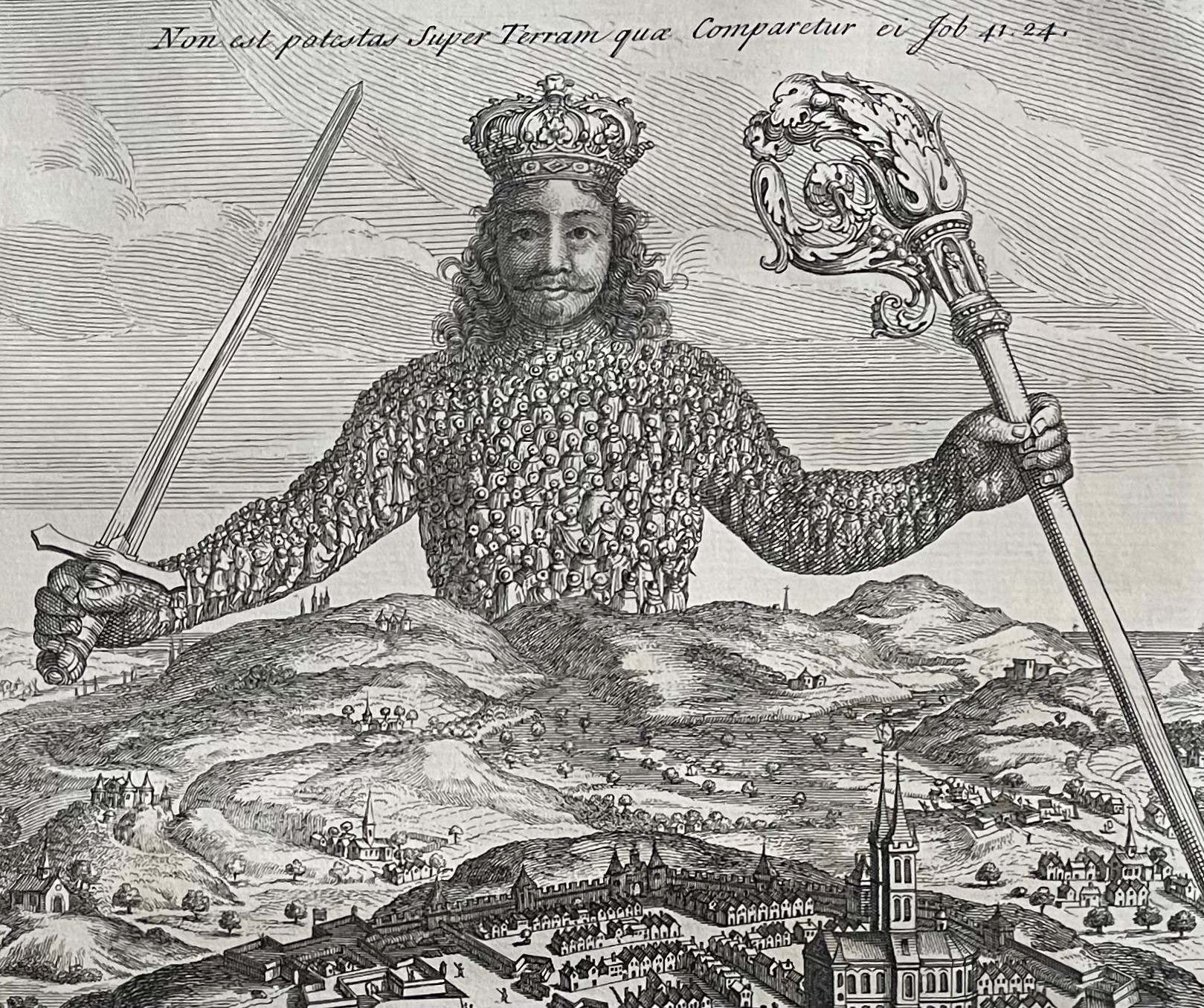
It is difficult to imagine how fully the feudal order affected every aspect of feudal society. The feudal social hierarchy was deeply rooted in tradition, religion and pervasive over everyday life. Inheritance played a primary role in the division of land, for both nobility and peasants, a social relation that capitalism maintains to the benefit of the accumulators of capital to this day. Unlike inheritance today, the claim to land came with mutual social obligations to those above and below you in the hierarchy. While the monarch might in theory own all of the land in the realm, they subdivided and placed it under the administration of the nobility. The noble lords provided military support and administered the land on behalf of the monarch, while the monarch would mediate conflicts between the lords and ensure the security of the realm. The same mutuality applied to peasants, who would be given access to small plots of land and the protection of the lord in exchange for labour, a portion of their agricultural products and the maintenance of the lord’s estate. Social mobility was nearly non-existent under this system of birthright – you were born into a predestined class, tied to a piece of land by inheritance and compelled to meet the obligations placed on you by the social order.
In the feudal system, although the monarch enjoyed absolute power in theory, inter dependence meant that power was shared to varying degrees between the monarch, nobility and religious leaders in the form of the clergy. The clergy’s primary role was to provide ideological legitimacy to this system. The church not only maintained that the monarch’s authority and the hierarchy established under the monarch was divinely ordained, but also justified military conquest through theories such as just war and holy war.
The Contradictions of Feudal Society
In spite of the ruling classes’ intentions to maintain a fixed, unchangeable hierarchy, crises rocked the feudal system from the 14th century onward. The Black Plague is perhaps the greatest of these. The pandemic ravaged feudal society, killing at least a third of the European population. The sudden shortage of labour caused by the plague fundamentally shifted the balance of forces in feudal society. Paternal lines were cut short, providing new opportunities for landless peasants, and empowering both widows as the new inheritors of land and young women who became crucial to the reproduction of the lost population. Lords, desperate to make up for lost productivity, demanded more labour and higher taxes. In these conditions, peasant revolts ensued. In reaction, the nobility instituted the enclosure movement, a process whereby land that was held in common and utilised by the peasants was appropriated for private use, leading to the eviction of peasants from land that had been inhabited by their families for centuries.
These contradictions were further sharpened by the discovery of America. Colonial expansion flooded European society with wealth, empowering a rising middle class of merchants, professionals and intellectuals. Advances in productive forces saw the development of specialised industry, at this point mainly focused in rural areas. This specialisation of industry transformed the economy. Where previously peasants were fed from the land that they inhabited, the enclosure movement and transformation of rural economies led to dependence on imports. Subjected to market forces, grain prices rose by as much as 600% in parts of Europe between 1400 and 1500, leading to widespread famine and more frequent revolts.
Outside of Europe, colonialism intensified instability. Without the protection of birthright that was only extended to the citizens of colonising nations, colonised people were systematically dispossessed, subjected to slavery or exterminated, leaving them no choice but to violently rebel.
Revolution
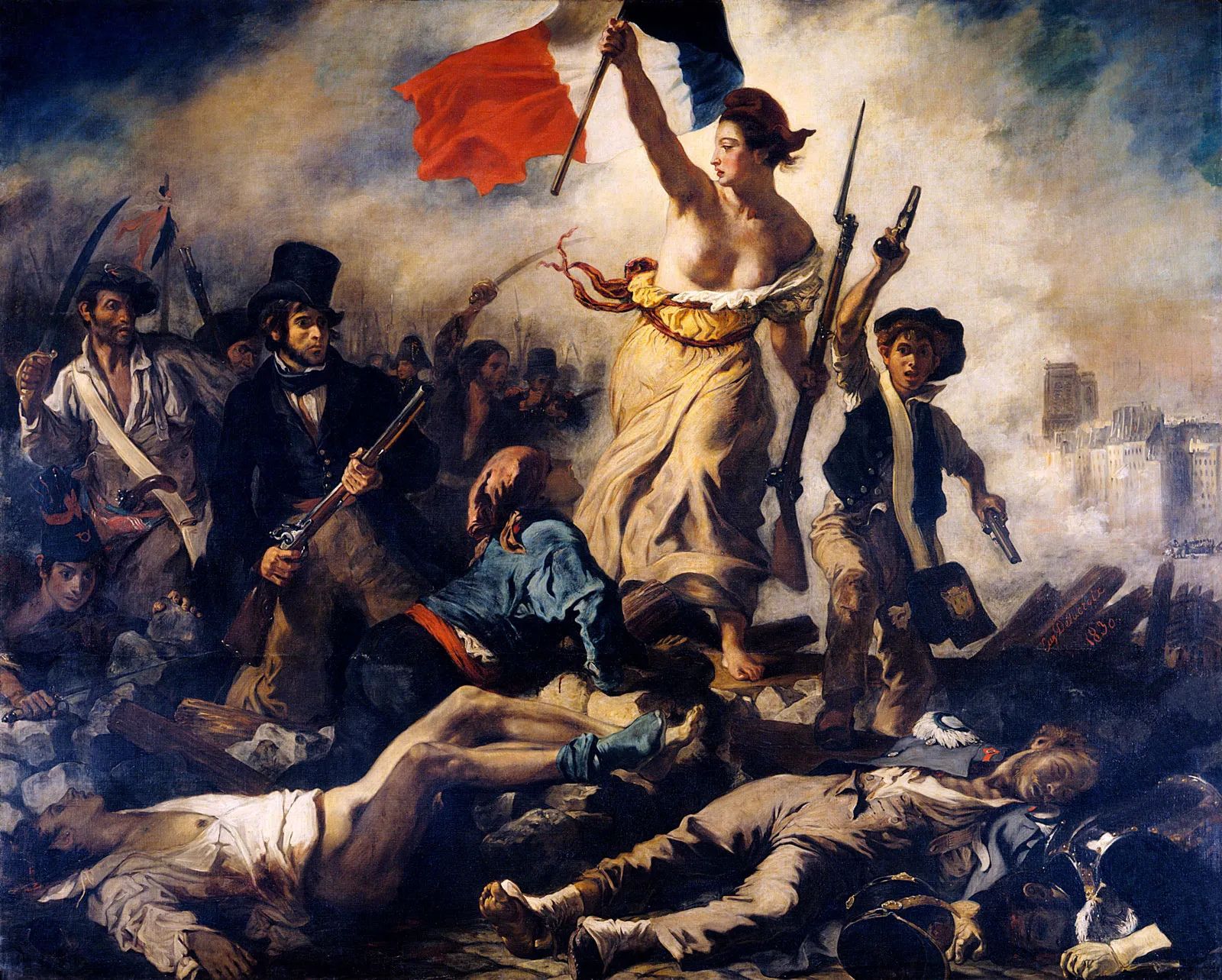
In France, the bread revolts were the catalyst for a revolution that provided the eager middle classes an opportunity to express the new Enlightenment ideas that captured their imagination with a violent overthrow of the feudal order. With the advent of the French Revolution, liberal thought cemented itself into the consciousness of French society, replacing the old, discredited ideas of divine right with the mantra liberté, égalité, fraternité.
This movement was not particular to France. Across the Atlantic ocean, a similar revolution occurred, resulting in the creation of the United States of America. The founding principles and constitutions of these republics are the basis on which the modern notion of a Western democracy.
Their success inspired others. In South America, Simón Bolívar followed their example to flame popular uprisings that saw the decline of colonial rule. In other parts of the world, such as here in Africa, liberal ideals would still find their expression in anti-colonial independence struggles in the 20th century. In all cases, the ideological undercurrents of these movements were deeply influenced by rationalist thinkers.
The Priests of Liberalism
Influential figures such as Montesquieu, Voltaire and Jean-Jacques Rousseau in France, and John Locke, David Hume and Thomas Paine in the English speaking world, helped shape liberal thought. They saw their project as one that applies rationality to discover the fundamental, natural rights of man, namely:
- the right to life,
- the right to liberty,
- the right to have a family,
- the right to own property,
- freedom of thought,
- freedom of speech.
Even at this early stage of the liberal political project, these thinkers were aware of the contradictions between these ideals and their vision of society. Consider slavery during this period. It was foundational to the wealth and development of the United States, but stood in grim contradiction to the right to liberty.
The way in which these thinkers dealt with these contradictions gives us insight into the true goals of the liberal project. Take as an example John Locke’s Two Treatises of Government on the topic of slavery. He argues that while man has a natural right not to be subjugated to another, man also imposes a social order through law that is as justified as the natural order. Of slavery specifically, he argues that no man has the right to give away his life, since he does not possess his life to begin with. He goes on to say:
“I confess, we find among the Jews, as well as other nations, that men did sell themselves; but, it is plain, this was only to drudgery, not to slavery: for … the master of such a servant was so far from having an arbitrary power over his life, that he could not, at pleasure, so much as maim him, but the loss of an eye, or tooth, set him free.”
As simple as that, the contradiction of a society built on the basis of human rights to life, liberty and freedom, and the brutal subjugation of Africans by plantation owners is resolved – by conveniently redefining slavery!
This aspect of Liberalism and rationalist thought shows us that, rather than impartial conclusions reached through the application of reason and the consideration of material facts, the true nature of these projects is to justify the conclusions that these thinkers want to reach. That is to say, these projects are fundamentally apologetic. Consider the class of people who established the French and United States republics. They were land owners, small proprietors and merchants, sick of giving the aristocracy their supposed due. Should it come as any surprise that their intellectuals came to conclusions that suited their class?
The Class Nature of Liberalism
Returning to the Two Treatises of Government, Locke argues that private property is a natural right based on the labour that man undertakes to acquire property. Yet here he performs a slight of hand, by stating that he is entitled to take ownership of common land as his own because his servant has laboured on it:
“Thus the grass my horse has bit; the turfs my servant has cut; and the ore I have digged in any place, where I have a right to them in common with others; become my property, without the assignation or consent of anybody.”
The contradiction is clear: Locke has the natural right to the fruits of his own labour, but his servant does not. Locke takes for granted that there exists a class of people who sell their labour to survive. This might not seem like such a strange concept to us today, but during the time of Locke’s writing most people were peasants, living off the land and owning the products of their own labour, except for the modest portion of their labour owed to their lord. Locke imagines the origins of the property owning class that have hoarded enough to allow them to buy the labour of others:
“But since gold and silver … has its value only from the consent of men … it is plain, that men have agreed to a disproportionate and unequal possession of the earth … by receiving in exchange for the overplus, gold and silver, which may be hoarded up without injury to anyone; these metals not spoiling or decaying in the hands of the possessor.”
Much can be said about just how wrong Locke is about the impact of his class’ hoarding on the rest of society, which is clearer today than ever before, but for now it is important to point out that the property hoarded in this way is different from personal property. The value its owner derives from it is not personal use, but profit. So when Locke argues for private property, do not mistake it for your toothbrush, your bed or your clothes. What he is arguing for is the ownership of money, land, machinery and materials that can be mixed with the labour of others to allow its owner to seize profit.
We should also understand the thinking that allows Locke to take the position of his servant so for granted, in spite of his lip service to the equality of man. The prevailing view of these thinkers was that the thing distinguishing the property owning class from the peasant, the servant and the vagabond, was their moral character. The property owner was seen as the wise penny-pincher, the industrious rodent with one eye fixed on the future, working tirelessly to produce more than they consume in preparation for winter. In contrast, those who were increasingly forced to sell their labour to the property owning class were seen as giving in to their animal desires. Moved only by gluttony and sloth, these louts created a situation where they would either consume all that they produce or work only as much as was required to satisfy their appetites in the moment.
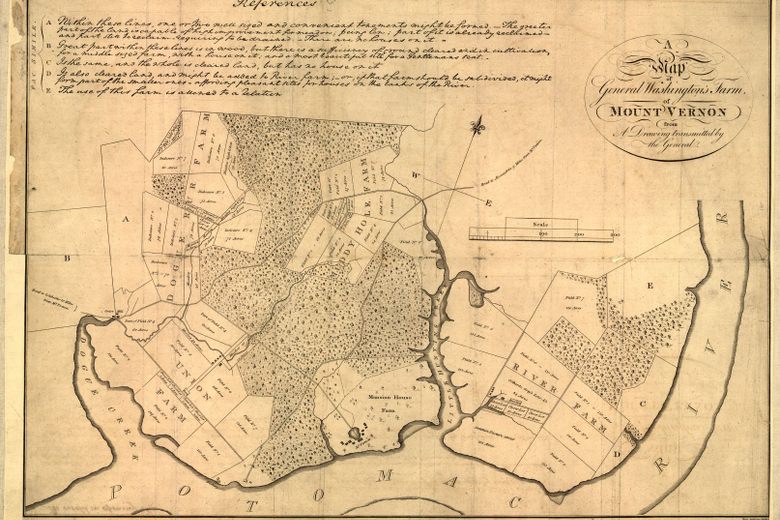
This moralistic view on the origins of the property owning class, referred to as primitive accumulation, is both overly simplistic and historically ignorant. In Capital Volume I, Karl Marx dedicates an entire chapter to this opportunistic understanding of primitive accumulation. He points to historic developments such as the enclosure movement as examples of the brutality that was necessary to separate peasants from their means of production, forcing them to sell their labour to buy the necessities of life. He remarks:
“The so-called primitive accumulation, therefore, is nothing else than the historical process of divorcing the producer from the means of production.”
While he does not address the true root of class divisions, even a liberal thinker like James Madison, the “Father of the American Constitution”, recognised the class nature of the society that he envisioned. Madison admits that the right to private property establishes distinct classes in society:
“From the protection of different and unequal faculties of acquiring property, the possession of different degrees and kinds of property immediately results; and from the influence of these on the sentiments and views of the respective proprietors ensures a division of the society into different interests and parties.”
Further, he recognises the conflict that arises between these classes:
“The most common and durable source of factions has been the various and unequal distribution of property. Those who hold, and those who are without property, have ever formed distinct interests in society.”
But from his point of view, this conflict is easy to resolve:
“…to refine and enlarge the public views, by passing them through the medium of a chosen body of citizens, whose wisdom may best discern the true interest of their country, and whose patriotism and love of justice, will be least likely to sacrifice it to temporary or partial considerations.”
Conclusion
Madison gives us insight into the intended nature of liberal democracy. It is not democracy in the sense of rule of the majority, but the handing over of power to a “chosen body of citizens” who will rule “wisely” in everyone’s stead. Pay no mind to the fact that the system that he and his contemporaries established ensures that those representatives are selected from his class, by his own admission establishing the supremacy of their own interests.
It is exactly here that we find the primary contradiction in the rights advocated for by liberalism. Given that private property sharply divides society into two classes – those who own property and those who do not – and that these thinkers are all from the property owning class, arguing that the right to own property is natural and inalienable is no different to the monarchy’s insistence on the divine right of kings. Should it come as any surprise then that when these rights come into conflict, the right to private property always comes out on top?
Ideologies change and develop as they come into contact with reality. Liberalism today is not the liberalism of the 18th century. Where liberalism coexisted with slavery two hundred years ago, liberals will point out that liberal democracy in South Africa contributed to the end of apartheid. But the core contradiction of the supremacy of the right to private property remains. We see it when we look at townships miserably huddled against the outskirts of wealthy suburbs. We see it in rural communities that lack access to basic services, while international conglomerates extract their national mineral wealth from under their feet. We see it when the law is weaponised against the poor, as families are evicted by corporations who enjoy greater legal rights than human beings.
For thinkers like Locke and Madison, these tensions could be solved through legal equality, constitutional limits on power, and prosperity through commerce. Can liberalism still deliver on this promise in South Africa? That is the question that we will consider in the next instalment.