[Ciarán Slemon & Victor Murray Vedsø, 27 July 2026]
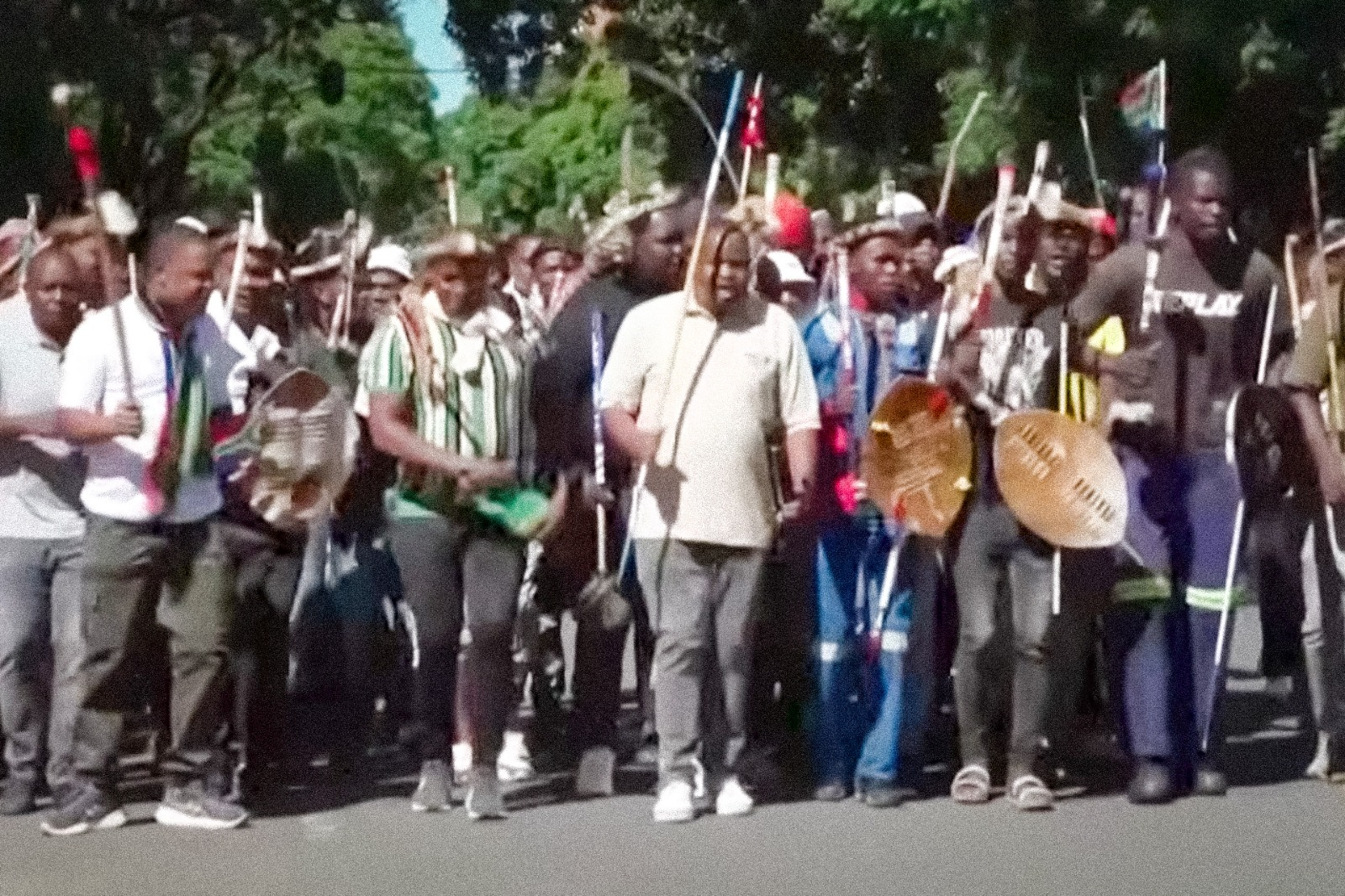
Over the past three months, a wave of xenophobic demonstrations, attacks and killings against migrants has swept South Africa. Shops have been looted, foreigners chased out of their homes, while more than 160,000 people have been forced to flee the country in fear for their lives. The South African right wing is currently cheering on the violence and pushing for an escalation of the brazen campaign, which will undoubtedly result in more killings unless a fightback is organised.
Meanwhile, the political establishment – including the government led by the African National Congress (ANC) – is stoking the flames. With meek statements, figures like Cyril Ramaphosa condemn the worst excesses of violence, while at the same time ramping up anti-migrant policies. This is nothing more than a cynical bid to divert attention from the government’s own mismanagement of the country and the pro-capitalist policies that have laid the basis for the current situation in South Africa. Anti-establishment parties like the MKP (uMkhonto weSizwe Party) and even the EFF (Economic Freedom Fighters) have also jumped on the xenophobic bandwagon to different degrees.
What is needed to solve the crises that mire South African society is neither Zulu nationalism nor a more ‘humane’ form of immigration control. Capitalism has created the conditions of suffering and misery for millions of migrants and South Africans alike, and can only be fought through a programme to end corruption, unemployment and poverty – the root cause of the xenophobic scapegoating currently on display. This struggle requires the unity of all workers for a socialist transformation of society.
A popular movement?
The demonstrations that began spreading across South Africa in March 2026 did not emerge from nowhere, and are not the first of their kind. In fact, South Africa – while portrayed internationally as a country that ‘overcame’ racism through the anti-apartheid movement – has been wrought with poverty and inequality ever since, laying the basis for renewed xenophobic movements.
Currently, the demonstrations are mainly driven by organisations like March and March, with support from groups such as Operation Dudula and others linked to parties like ActionSA and Patriotic Alliance. March and March was established in 2024 around TV broadcaster and media personality Jacinta Ngobese-Zuma, while Operation Dudula – meaning ‘force out’ or ‘knock down’ in isiZulu – has been around since 2021, registering as a political party in 2023.
Together, they have now turned scattered attacks in the townships into a coordinated national campaign. Setting a ‘deadline’ of 30 June 2026 for undocumented migrants to leave the country, roughly 120 marches were held nationwide on this day, where more than 900 people were arrested in the violent riots that ensued.
Violent protests have led to a slew of killings. In Mossel Bay, roughly 55 shacks were burnt down, killing two Mozambican men and a South African teenager. In Pietermaritzburg, a Malawian man was attacked by a mob before escaping into a river, only to be found washed up dead with a cut on the head and injuries on his mouth. In Cape Town, a Ghanaian tailor was shot dead in his shop, while a migrant in Durban threw himself from the eighth floor of a building after fearing that he had been targeted by the anti-immigration protest. He succumbed to his injuries shortly after.
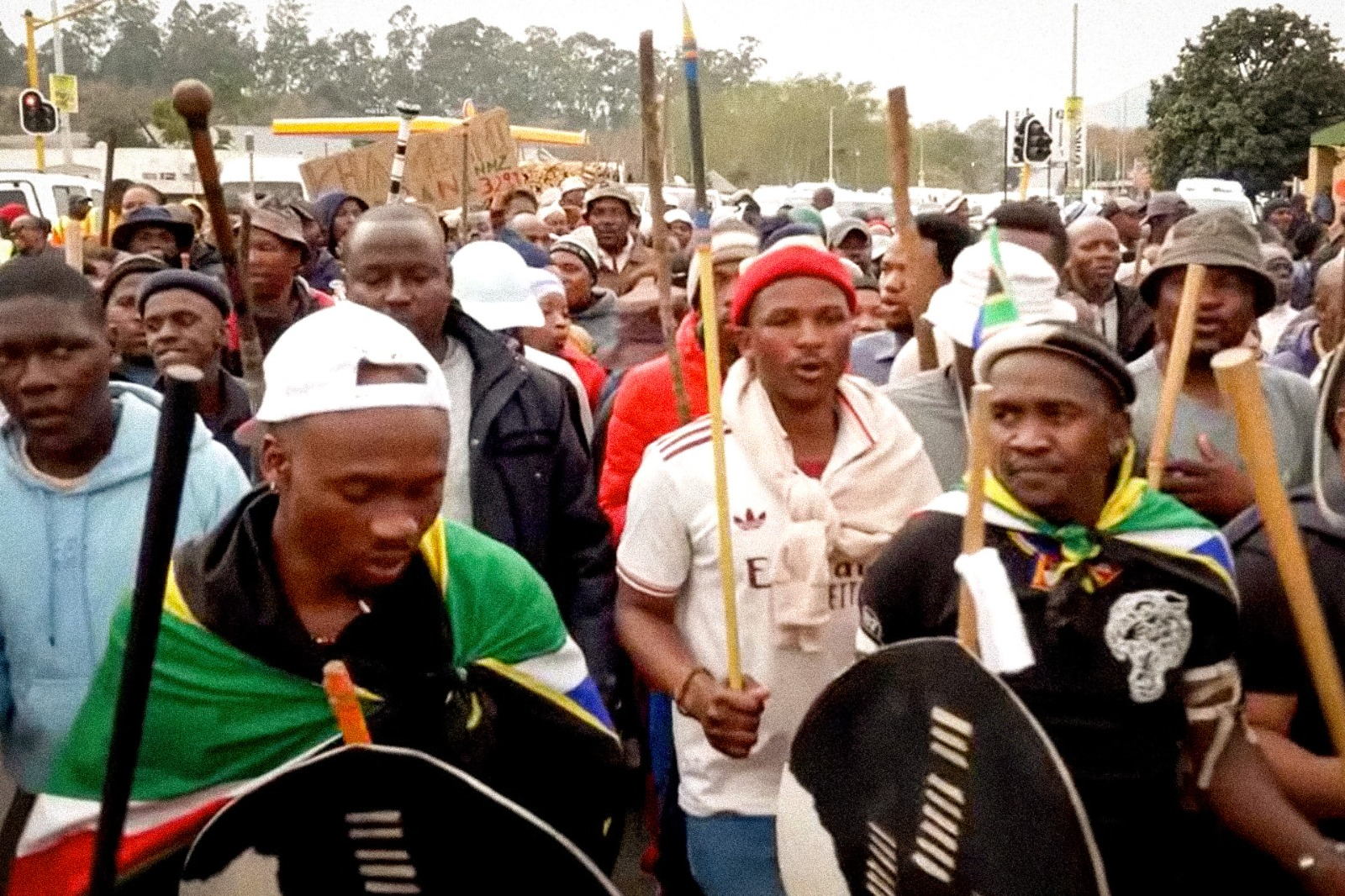
While Operation Dudula and March and March claim that their demonstrations are peaceful, they clearly aim to stoke terror among poor immigrant communities. Following the nationwide demonstrations on 30 June, Ngobese-Zuma said that the day-of-action had “failed”, meaning that it had not gone far enough and chased out enough immigrants from the country.
Rather than dissolve after the deadline, the movement escalated its methods, announcing weekly Thursday demonstrations that by mid-July involved activists entering homes to search out undocumented residents and ‘checking papers’, functioning in practice as an auxiliary to the state’s own immigration enforcement, which has itself ramped up the persecution of migrants.
Both Ngobese-Zuma and Operation Dudula speak in terms of representing ‘ordinary South Africans’. In a recent interview, Ngobese-Zuma described the recent protests as a citizens’ movement that simply wants to “put South Africans first” and ensure that the “limited resources benefit poor and vulnerable South Africans”. Yet the ideas and methods of Operation Dudula and March and March certainly have nothing in common with these populist platitudes, as evidenced by the recent violence.
Like Herman Mashaba of ActionSA and Gayton McKenzie of The Patriotic Alliance, the leaders of these groups are grifters that exploit the real grievances that exist among a wide layer of South African society. In particular, they are appealing to poor petty-bourgeois layers and those struggling to make a living through the informal sectors of the economy in the townships. While a layer of South African workers can undoubtedly also be drawn into the orbit of these groups, their support is generally low. In the 2024 national elections, Operation Dudula only received a negligible number of votes – 0.07 percent in Gauteng, 0.05 percent in KwaZulu-Natal, and 0.02 percent in the Western Cape. Meanwhile, ActionSA and The Patriotic Alliance are still polling under 5 percent.
A blind alley
Still, it is not difficult to explain why a new wave of xenophobic violence is once again gripping South Africa. The economy has been in a state of decline for decades, as the promises of solving the problems in South Africa and lifting people out of poverty and into work through capitalism have failed completely. The Tripartite Alliance – a coalition between the African National Congress, the Congress of South African Trade Unions, and the South African Communist Party – lies more and more discredited, with the ANC for the first time sinking to 40 percent of the vote at the last national election.
Crime, violence against women, poverty, unemployment, a lack of service delivery, and infrastructural decay are all hallmarks of South African society today. The education system has been under immense strain for decades, while the waiting list for government housing grows and grows into the tens of millions. Waiting times at under-resourced government hospitals and clinics are endless, with conditions considerably worse outside of urban centres.
Take unemployment. As of the beginning of this year, unemployment stood at 32.7 percent, with 345,000 jobs lost since the previous quarter alone. 8.1 million people of working age and ability are now without a job – and this is just according to the official figures. Unemployment of 15-24 year-olds is nearly double the national average at 60.9 percent. 37.6 percent of those are neither in employment, education, nor training.
This has created previously unseen levels of deprivation, with 23 percent of South African children living in severe food poverty. Social grants for the elderly, meanwhile, are kept so low that recipients live on less than half of what a minimum wage job would pay.
Alongside this, the wealth at the top has not just increased, South Africa remains the most unequal society anywhere on Earth, with the top 10 percent raking in 66 percent of the total nation’s income against 6 percent for the bottom half. The top 10 percent hold an estimated 86 percent of the country’s total wealth. The country’s eight billionaires and roughly 41,100 millionaires sit atop an economy where three decades of ANC governments have long since abandoned any promises of redistribution and wealth sharing laid out in the Freedom Charter.
The policy of Black Economic Empowerment, far from lifting the masses out of poverty, has created a black capitalist class who, along with their white counterparts, make millions on the back of the working class, whose wages face enormous downward pressure from mass unemployment.
Likewise, the state is rotten to the core with abuse of power, as exemplified by the South African Police Service (SAPS). Nearly the entire elite of the SAPS is currently on trial or in jail for fraud and corruption in an ongoing judicial commission. The SAPS presence is near invisible in rural areas and townships when it comes to making communities safer, but they are out in the hundreds when it’s time to put down a peaceful protest or a strike, when communities ask for long-promised service delivery, or workers ask for better conditions. More than R600 million (around $36 million) was spent on the SAPS deployment on 30 June, a whole R100 million (around $6 million) more than the government’s Small Business Development fund for spaza (grocery) shops.
Political bankrupts
The recent xenophobic demonstrations have only underlined how politically bankrupt the political elite in South Africa has become. While paying lip service to the struggle against the racist apartheid system, condemning xenophobia in the abstract, the Government of National Unity (GNU) led by the ANC has established dedicated immigration courts to speed up deportations, while hiring 10,000 labour ‘inspectors’.
On paper, these are meant to fine employers who use undocumented labour, but they will certainly be used mainly to increase deportations – a hallmark of the current government, which arrested almost 9,000 immigrants in two weeks following the 30 June demonstrations.
Home Affairs Minister Leon Schreiber from the Democratic Alliance (DA) has already boasted about completing 110,000 deportations over the past two years. Likewise, Gayton McKenzie, who is the Minister of Sport, Arts and Culture, has raised the slogan of “Abahambe” (“they must go”), praised ICE in the United States, and filmed himself patrolling the Limpopo River, sending desperate Africans back across the border.
This is the real meaning of the ‘national unity’ to which the ANC has put its name: unity with the reactionary right wing. Scandalously, even the South African Communist Party has advocated for biometric registration of foreigners and “orderly migration management”, giving credence to the GNU’s policies.
While they and the rest of the Tripartite Alliance may oppose xenophobia in words, they have defended and managed South African capitalism for over three decades. At the end of the day, the poverty, unemployment and general decline is a product of their defence of private property and imperialism, getting rich off the back of the masses. It is no wonder that 47 percent of South Africans say no political party represents their views.
The post-apartheid era shows the utter failure of reformism in South Africa, which like everywhere else bows to the needs of the ruling class, eventually leaving the political field open to the right wing.
A communist answer
In this situation, it is absolutely essential that the course is changed and that the labour movement shows a way out of the crisis. Only a socialist programme to end corruption, unemployment, poverty and austerity can act as an alternative to right-wing demagogy, which leaves the workers divided and disarmed and only helps the ruling class.
In practice, this means a struggle for nothing less than the revolutionary overthrow of South African capitalism. While today the country is characterised by widespread poverty, it is also the most economically advanced country on the continent. Far from having ‘too little’ as the bourgeois politicians like to claim, it has the potential to feed and clothe all its peoples, to guarantee decent housing and jobs for all. The question is, who holds and controls that wealth?
Currently, these vast resources are being funnelled into the bank accounts of the rich, who leave the majority fighting over the scraps. For this to change, the resources of the country must be taken out of their hands and put under the control of the working class.
The South African labour movement has a glorious tradition of class struggle, solidarity and internationalism. It was this that brought down apartheid in 1994, despite the heroism being diverted into safe and pro-capitalist channels. Today, the leaders of the South African labour movement could fight to mobilise the force of the working class, against xenophobia and as a step to transform society.
But as we see, this is not being done. Rather than fight, the traditional organisations of the working class have accepted the status quo, failing to understand the contradictions of the post-apartheid era.
On the question of migration, communists oppose immigration controls, not by denying that migration can place downward pressure on wages, but by rejecting the conclusion drawn from that fact. Capital pits workers against each other along national lines. This is precisely what the nation state and borders exist to enable. Therefore, asking the capitalist state to ‘manage’ migration on the labour movement’s behalf is like asking the fox to guard the henhouse.
The working class, as has been shown by the current situation in South Africa, cannot count on any part of the capitalist state to regulate labour to the benefit of workers. For the state, serving the profit motive of the ruling class comes before all else. At the end of the day, only workers’ control of the economy can turn the opposing interests in society on their head, and work to eliminate unemployment and provide decent jobs, housing and care for all.
It is this that would eliminate the movement behind the marches we see today, because the competition between different layers of the poor and exploited would be materially overcome.
In South Africa, far from relying on the Tripartite Alliance to enforce a ‘soft’ version of the xenophobic laws against migrants, the actual answer is to mobilise the working class to transform society, and as a part of this to defend and protect migrants as brothers and sisters in the collective struggle against capitalism. Taking up the defence of migrants today is not an aside for the labour movement, as the forces of reaction will undoubtedly be used to break strikes and put down the struggle of South African workers too in the period ahead.
Building a workers’ movement on this basis is what we are fighting for. Our immediate task is to forge an organisation that can patiently explain all this to the layers of workers and youth, who are desperately looking for a real alternative to the class collaborationist and xenophobic ideas that characterise society today.
In the end, it is only the fight for the overthrow of capitalism in South Africa and the rest of the continent, which can solve the question of poverty, misery, and the xenophobic reaction which grows from the soil of class society.